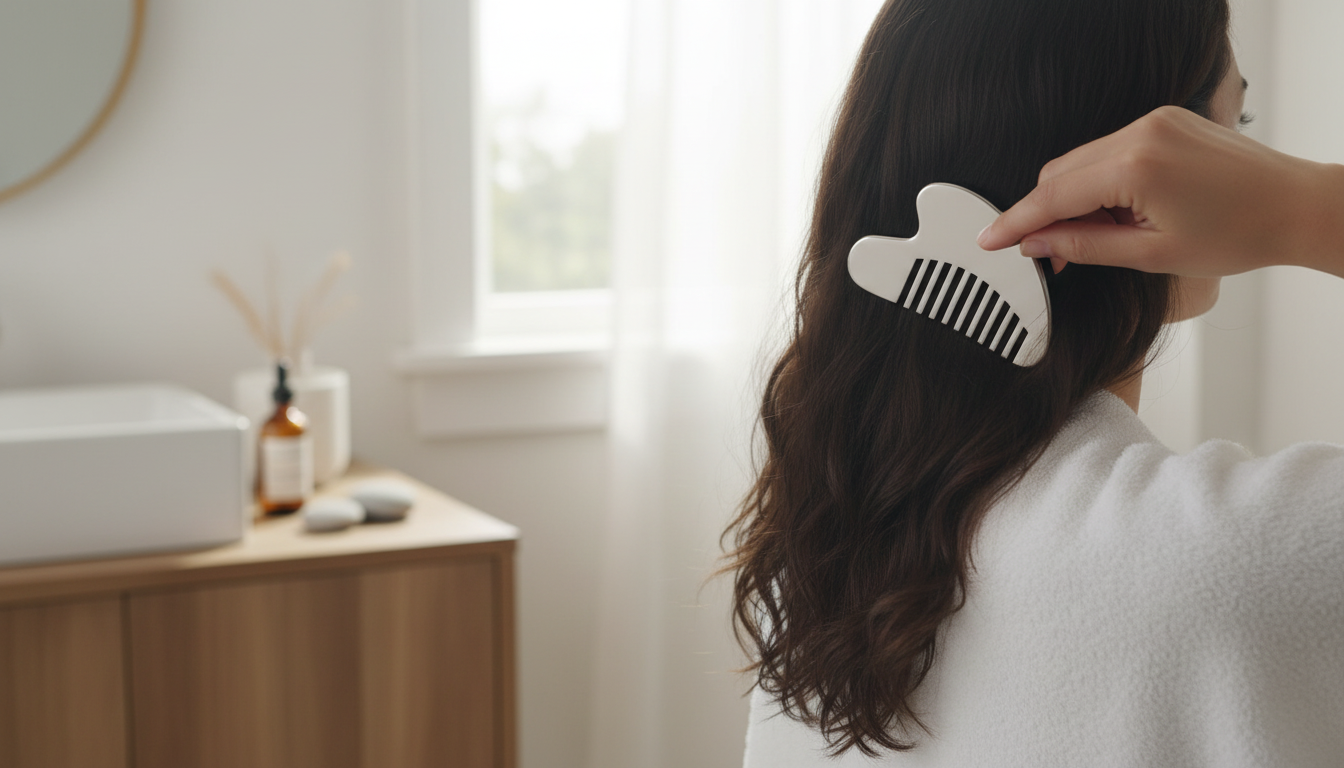
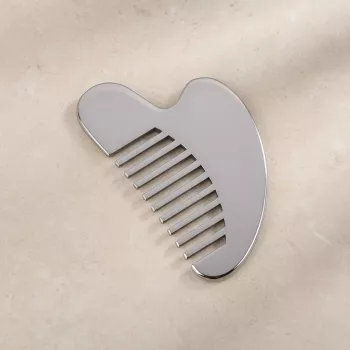
A stainless steel gua sha comb offers a smooth glide, easy cleaning, and consistent pressure for scalp stimulation and muscle massage. The heart-shaped design adds multiple edges and curves that can follow the contours of the head, neck, and shoulders for targeted, at-home relaxation.
A stainless steel gua sha comb is a hand-held massage tool designed for scalp work and body muscle relief. Unlike porous materials, stainless steel is non-absorbent, which helps it stay low-odor and quick to clean after using oils or serums.
The heart shape isn’t only aesthetic—it’s functional. The rounded curves can nestle along areas like the jawline, temples, and sides of the neck, while the comb-like edge tracks across the scalp in steady passes. Depending on preference, it can be used with a light oil or serum for extra glide, or on a dry scalp for a brisk, stimulating massage (always adjust pressure to comfort).
For a simple, low-fuss option, the Heart-Shaped Stainless Steel Gua Sha Comb – Muscle & Scalp Massage Tool is an easy addition to a shower-to-styling routine or a post-workout wind-down.
Scalp tension can build up from tight styles, screen time posture, and everyday stress. A metal gua sha comb can help loosen the “tight scalp” feeling and encourage a calmer, more intentional hair routine. It also pairs nicely with product application—used carefully, it can help spread a small amount of scalp serum more evenly along part lines (use minimal product to avoid slippery handling).
Many people also enjoy the cooling feel of stainless steel, especially after a warm shower or blow-dry session. For general hair and scalp care best practices, the American Academy of Dermatology Association hair care basics is a helpful reference for keeping routines gentle and consistent.
| Technique | Where to use | Pressure | Typical duration |
|---|---|---|---|
| Comb strokes | Crown to nape | Light to medium | 1–3 minutes |
| Short wiggles | Temples and behind ears | Light | 30–60 seconds per side |
| Edge glide | Hairline and occipital ridge | Light to medium | 1–2 minutes |
| Spot hold | Tender points | Very light | 10–20 seconds per point |
Beyond the scalp, the same tool can be used on common tension zones like the upper traps, back of the neck, forearms, calves, and even along the sides of the shoulders after long days or training sessions. The curved heart edges can gently “hook” along muscle borders to target tight bands—always stay on soft tissue, not on bony prominences or the front of the neck/throat area.
Stainless steel tends to deliver consistent pressure without the drag that can happen with rougher finishes. It can also fit into different recovery preferences: pair it with warmth (like a warm shower) before working on stiff muscles, or use the tool chilled for a refreshing cool-down. For general information on massage and what to expect, see the National Center for Complementary and Integrative Health (NCCIH) overview of massage therapy.
Start with clean skin or scalp. On body areas (neck, shoulders, legs), apply a small amount of oil or lotion to prevent tugging. On the scalp, many prefer dry use; if hair is long or prone to snagging, a tiny amount of scalp-friendly serum can improve glide.
For a more complete at-home self-care setup, pair your massage tool with targeted tech like the 7-Color EMS Microcurrent Face & Eye Lifting Wand with Heat and Vibration on separate areas (face/eye zone) to keep routines organized and comfortable.
To prevent scratches and keep it lint-free in a gym or travel bag, store it in a clean pouch or case. A simple organizer like the Purple Canvas Cosmetic Bag can help keep tools separated from keys, clips, and other items that could nick the surface. If using oils, wipe the tool immediately after each session to avoid residue buildup and slippery handling.
| Feature | Stainless steel | Stone (varies by type) |
|---|---|---|
| Chipping risk | Low | Medium to high |
| Cleaning | Simple, non-porous | May require extra care |
| Cooling effect | Fast and noticeable | Often gentler and slower |
| Travel-friendly | Very | Can be delicate |
Dry use is possible, especially with lighter pressure and shorter sessions. Oil or serum can improve glide and reduce tugging, particularly on longer hair or for sensitive scalps.
Many people use it for a few minutes daily or several times per week. The best frequency is the one that doesn’t cause irritation—if you notice tenderness, redness that lingers, or bruising, reduce pressure or take a break.
It can be safe on the back and sides of the neck where the muscles are, using light pressure and slow strokes. Avoid the front of the neck/throat area, and stop immediately if you feel dizziness, tingling, numbness, or sharp pain.








Leave a comment