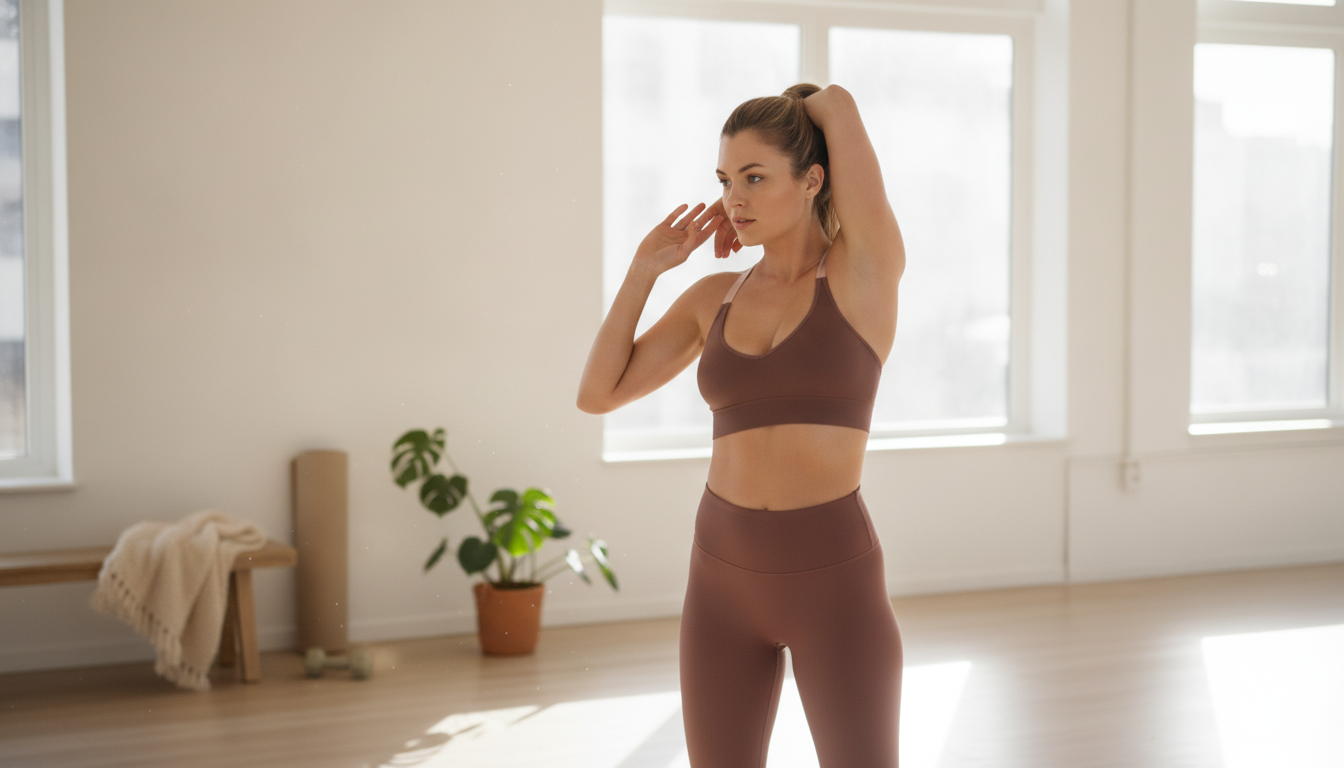
Long hours at a desk, phone scrolling, and stress can quietly pull the body into rounded shoulders and a forward head position. A short, consistent stretching routine can help open tight areas, wake up underused muscles, and make upright posture feel more natural. Below is a practical, low-equipment plan, plus a printable-friendly guide option for staying consistent.
Posture rarely “goes bad” overnight. More often, the body adapts to whatever it does most: sitting, leaning forward, and holding the arms in front of the body. Common patterns include a tight chest and front shoulders, a stiff upper back, tight hip flexors, and shortened neck muscles from looking down at screens.
Stretching helps by restoring length and movement to tissues that feel stuck, making it easier to stack the body in a more efficient line—ears over shoulders and ribs over hips—without feeling like you’re forcing a military stance. When you combine gentle mobility with slow breathing, you also reduce the tension that reinforces slouching (especially around the neck and upper traps).
The biggest secret is consistency. A few minutes most days tends to outperform the occasional long “catch-up” session because the body responds to frequent, low-threat reminders.
Stand with your heels a few inches from a wall. Aim for the back of your head, shoulder blades, and glutes to lightly touch the wall without forcing your ribs to flare. If your head can’t reach without tipping your chin up, prioritize chest, upper-back, and neck mobility.
Gently roll your shoulders back and down. If they feel pulled forward or “stuck” in front, focus on chest/shoulder stretching plus upper-back opening.
If your low back arches and your pelvis tips forward when you stand tall, you’ll likely benefit from hip flexor and quad stretches (and glute engagement).
If deep breaths make your shoulders lift toward your ears, add ribcage/pec mobility and practice slow nasal breathing during your stretches. For workstation setup help, OSHA’s computer workstation tips are a solid reference: https://www.osha.gov/etools/computer-workstations.
This routine is designed to be simple: a doorframe, a towel, and a little floor space. Move slowly, keep the intensity mild to moderate, and treat each position as a chance to breathe and “un-grip” tension.
Hold 30–45 seconds each side. Keep your ribs down (no low-back arch) and keep your neck long as you gently open the chest.
Place a rolled towel across your upper back (not your low back). Take 6–8 slow breaths, focusing on expanding the upper ribs. Think “open the upper back,” not “crank the spine.”
Hold 30–45 seconds each side. Relax the shoulder away from the ear and reach long through the top arm to encourage rotation through the upper back.
Hold 20–30 seconds each side. Keep it gentle—no yanking on your head. A relaxed jaw often helps the neck soften.
| Move | Time | Key cue | Common mistake to avoid |
|---|---|---|---|
| Doorway chest stretch | 1–2 min | Ribs down, chest open | Overarching the low back |
| Thoracic extension (towel) | 1–2 min | Breathe into upper ribs | Jamming the neck back |
| Thread-the-needle | 1–2 min | Reach long through the top arm | Shrugging the shoulder |
| Neck stretch (upper trap/levator) | 1 min | Gentle tilt/turn, relaxed jaw | Pulling hard on the head |
| Half-kneeling hip flexor | 1–2 min | Glute squeeze on back leg | Leaning forward instead of tucking pelvis |
| Figure-4 | 1–2 min | Keep hips square | Twisting or collapsing the knee inward |
| Tall posture breaths | 30–60 sec | Crown of head up, chin slightly back | Ribs flaring or locked knees |
For broader guidance on reducing strain at work, NIOSH’s ergonomics overview is a helpful starting point: https://www.cdc.gov/niosh/topics/ergonomics/. If you’re adding more movement to your week, the U.S. Physical Activity Guidelines can help you set a sustainable baseline: https://health.gov/our-work/nutrition-physical-activity/physical-activity-guidelines.
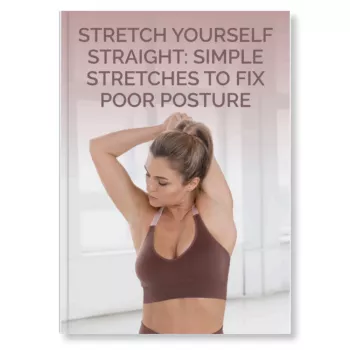
If you want an easy follow-along format, Stretch Yourself Straight: Simple Stretches to Fix Poor Posture | Digital Posture Correction eBook | Printable Posture Guide, Wellness PDF, Fitness & Self-Care Download is designed for quick reference and routine-building.
To keep your posture tools (a mini band, a rolled towel, or printed pages) in one spot, the Purple Canvas Cosmetic Bag can work as a simple grab-and-go organizer.
Aim for 5–10 minutes most days of the week. Brief desk breaks help, and re-checking your wall posture weekly can keep you focused on the areas that tighten back up fastest.
Stretching improves mobility and makes upright alignment feel easier, but lasting change typically happens faster when it’s paired with light strengthening and better screen/desk habits. Even a couple sets of simple upper-back work after stretching can reinforce the new position.
The doorway chest stretch and thoracic extension over a rolled towel are two of the most helpful starting points. Keep your ribs down and your neck long so the stretch targets the chest and upper back instead of dumping into the low back or neck.









Leave a comment