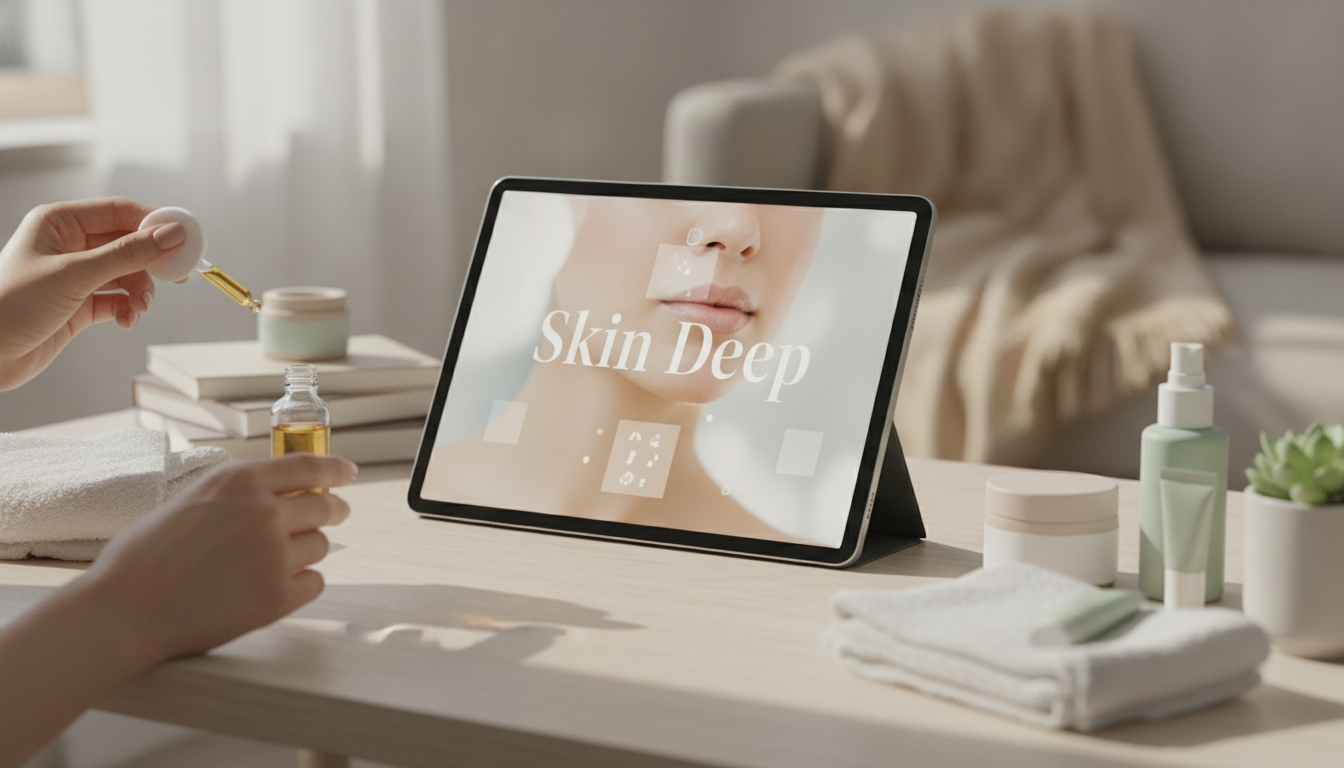
When skincare feels confusing, it’s usually because “skin type” and “skin condition” get blended together. One day your face is shiny by lunch; the next it feels tight after cleansing. Add in weather changes, stress, and new products, and it’s easy to buy solutions that don’t match what your skin actually needs.
Skin Deep: The Smart Guide to Knowing Your Skin Type (Digital eBook) focuses on a practical at-home self-assessment and then helps translate what you see into a routine that fits real life—with checklists, decision paths, and templates you can reuse anytime your skin shifts.
Skin type is your baseline tendency for oil production. Most people fall into one of four broad categories: oily, dry, combination, or balanced/normal. Your type is the “default setting” your skin returns to when it’s not being heavily influenced by over-cleansing, harsh actives, or extreme climate.
Skin conditions, on the other hand, can change fast. Dehydration, sensitivity, acne breakouts, redness, irritation, and seasonal barrier stress can temporarily make skin behave differently than its baseline type. Your goals are separate too—brightening, anti-aging, acne control, and tone-evening can apply to any skin type.
For foundational skin care guidance, the American Academy of Dermatology Association is a helpful reference, especially for keeping routines gentle and consistent.
Start with a gentle cleanse. Then skip all skincare for 60–90 minutes. The goal is to observe your natural behavior without moisturizers, sunscreen, primers, or treatment products affecting the read.
Notice how your skin feels and looks. Midday shine generally points toward higher oil production. Tightness, flaking, or a “paper-dry” feel can suggest lower oil—or a disrupted barrier that’s making you feel dry even when oil is present.
Don’t average your whole face. Forehead, nose, and chin often behave differently than cheeks and jawline. Many people are combination without realizing it because they treat the entire face like the oiliest (or driest) section.
One read isn’t a verdict. Sleep, stress, climate, and hormones can change the result. Repeating the same simple check a few times gives you a more reliable baseline.
These patterns are the most common starting point:
| Skin type | What it often feels like | Routine priorities | Texture tips |
|---|---|---|---|
| Oily | Shiny by midday; congestion-prone | Gentle cleanse; lightweight hydration; targeted exfoliation | Gel creams, fluid sunscreens, non-greasy moisturizers |
| Dry | Tight after cleansing; flakes; rough patches | Barrier support; richer moisturizer; avoid harsh exfoliation | Creams, balms, milky cleansers (as tolerated) |
| Combination | Oily T-zone, drier cheeks | Zoning (different products per area); balanced hydration | Light moisturizer overall + richer on cheeks if needed |
| Balanced/Normal | Comfortable; steady texture | Consistency; protect barrier; prevent over-treatment | Light-to-medium lotions; simple, stable routine |
Common dehydration signs include tightness, dullness, fine “crinkly” lines, and oiliness that shows up alongside discomfort. Over-cleansing, strong actives used too often, and low-humidity environments are frequent triggers. The first move is usually to simplify: gentle cleansing, humectant hydration, and barrier-friendly moisturizing before adding more actives. For more on dehydration, see the Cleveland Clinic overview.
Most mornings work best with a steady three-step structure: cleanse (or rinse), moisturize, sunscreen. Daily sunscreen matters for every skin type; MedlinePlus has a straightforward primer on sunscreens and broad protection basics.
It’s one thing to notice patterns; it’s another to translate them into a routine you’ll actually follow. Skin Deep: The Smart Guide to Knowing Your Skin Type (Digital eBook) is designed to bridge that gap with a clear framework you can revisit anytime.
Cleanse gently, then apply no skincare for 60–90 minutes and observe shine versus tightness. Check different face zones separately and repeat on multiple days to confirm a consistent pattern.
Baseline oil tendencies can shift with age, hormones, climate, and long-term routine changes, so reassessment is useful every so often. Skin conditions (like dehydration or irritation) can change much faster and may temporarily mask your baseline type.
Dry skin is a skin type with lower oil production, while dehydrated skin is a condition with lower water content that can affect any type. Start by simplifying: gentle cleansing, hydration-focused layers, and barrier-supportive moisturizing before adding more strong actives.












Leave a comment