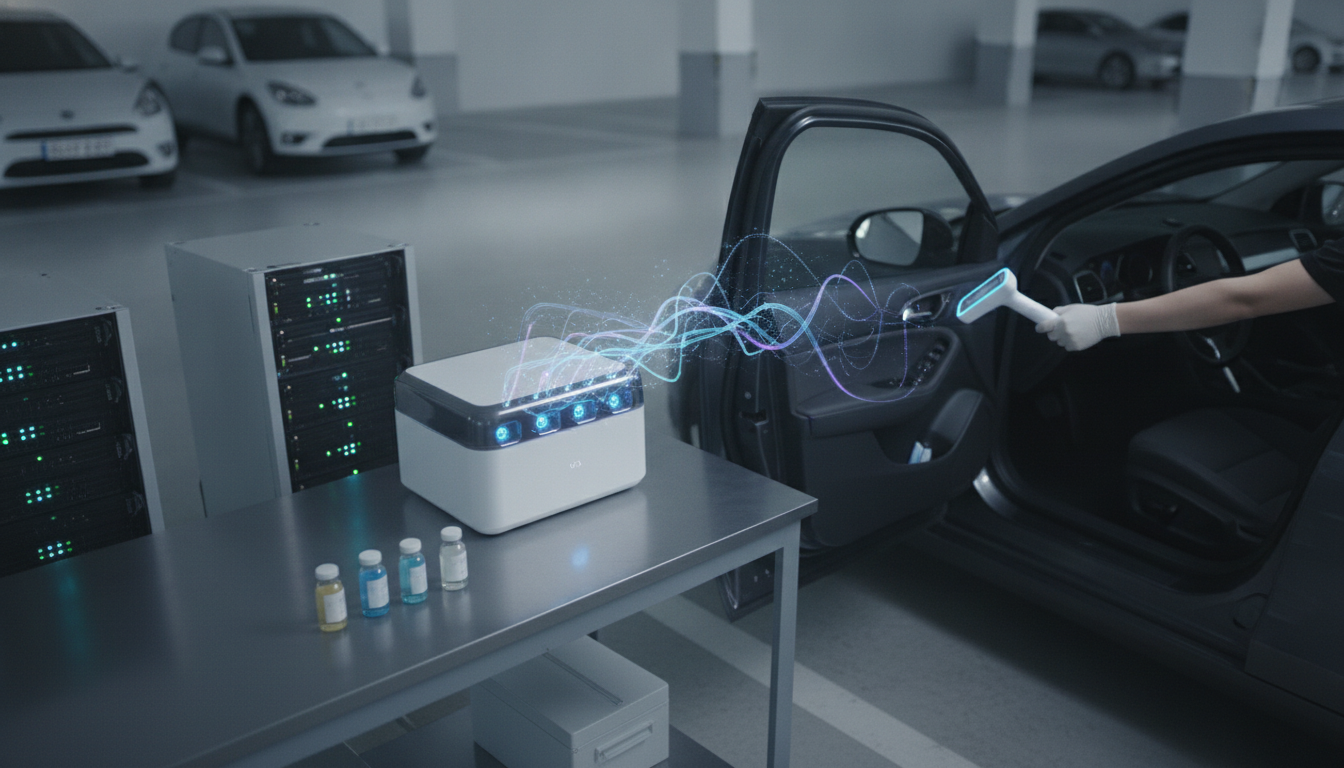
Smell has always been powerful but hard to measure. AI is changing that by turning scent into data—capturing chemical patterns, learning what they mean, and predicting how people will perceive them. Using sensor arrays (often called electronic noses) and machine-learning models, AI can detect tiny differences between odor molecules and recognize “fingerprints” tied to foods, flowers, smoke, spoilage, and even certain health-related biomarkers.
Traditional fragrance work relies on expert noses and extensive trial-and-error. AI accelerates the process by analyzing large datasets of aroma compounds and human perception notes. Models can learn relationships between a molecule’s structure and sensory descriptors like “citrusy,” “powdery,” or “woody,” then suggest new blends or substitutions that preserve a desired profile. This helps perfumers and product teams prototype faster while staying consistent across batches and suppliers.
AI-powered smell systems can help with quality control and safety. In food and beverage, they can flag early spoilage signals or verify origin and freshness. In manufacturing, they can monitor emissions and identify chemical leaks sooner. In healthcare research, AI can assist studies exploring how certain diseases may correlate with detectable changes in breath or skin odor—still an emerging area, but one with promising diagnostic potential.
As datasets improve, AI can support more personalized scent experiences—matching fragrance families to preferences, moods, or environments. For e-commerce, that means better product recommendations and clearer scent “maps” that translate a subjective experience into understandable notes and comparisons.
For a deeper look at the technologies behind digital scent and where it’s headed, visit the full guide here: https://flawlesslush.shop/how-is-ai-unlocking-the-power-of-smell/.
An electronic nose uses a set of chemical sensors to detect volatile compounds, then AI analyzes the combined sensor signals to identify patterns linked to specific odors. It’s less about “one sensor per smell” and more about recognizing a signature across many sensors.












Leave a comment